


The practice of meditation seems to be shrouded in an aura of mysticism, reserved only for monks living in remote monasteries far from civilization, but this idea couldn't be further from the truth. Meditation is the natural way we human beings have to regulate our nervous system and break free from the endless loop of thoughts in the mind.
Meditation brings us back to the present moment, pulls us out of autopilot and, in a nutshell, is the key to happiness. Proof of this is the study conducted to find out who was the happiest person in the world: https://www.elmundo.es/papel/lideres/2022/09/24/632c502dfc6c83971d8b456e.html
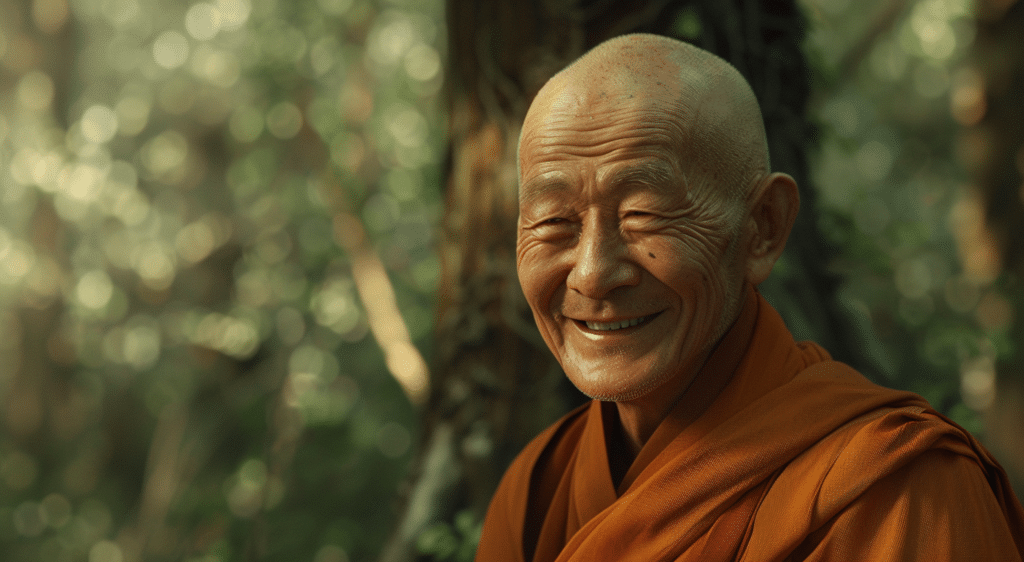
Contrary to any prefabricated Hollywood image of happiness, this study revealed that the happiest person on earth is a Buddhist monk who lives in solitude. With this I want to tell you that your idea of meditation may be limited by the stereotype of a society that is deeply disconnected on a spiritual level.
Meditation is the ultimate cure for stress, anxiety, and depression, as well as a catalyst for addictions and repetitive harmful behaviors. Meditating is the most powerful tool you can learn to have a full and satisfying life.
In this article I share everything I wish I had known about meditation when I started on this path. Below, I give you the keys to take your first steps in a simple way, without getting overwhelmed in the process.
What is meditation?
The simplest way I can explain this concept is to tell you that meditating is being still and focusing the mind. These are the basic principles of meditation, and I am going to explain them to you in detail in a simple and concise way, setting aside the paraphernalia that surrounds this practice.
Principles of meditation
1. Stillness
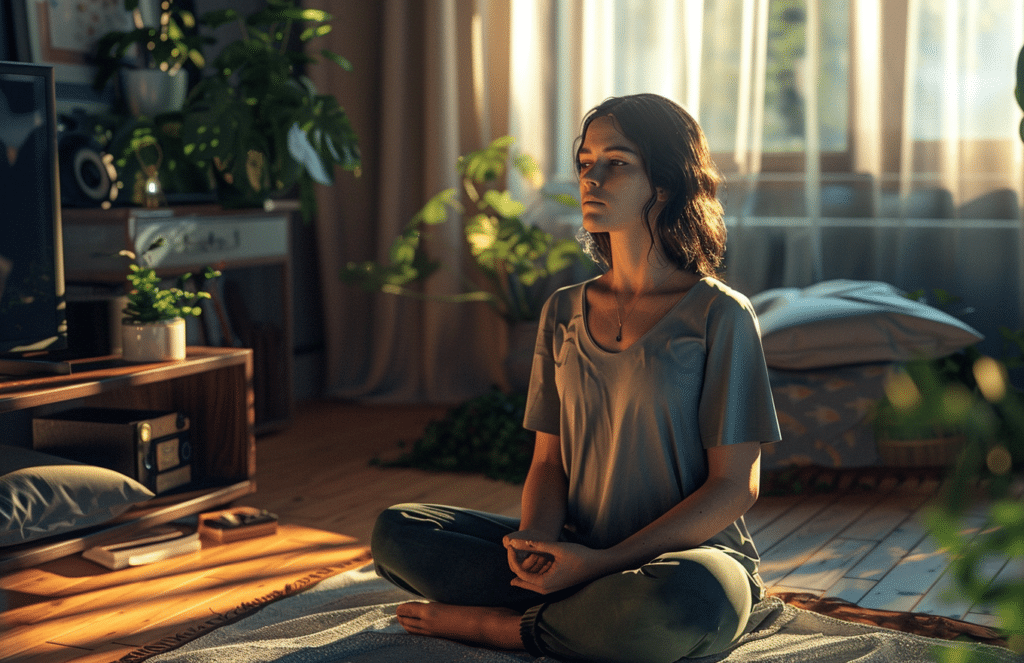
The first thing you need to internalize is the idea of stillness, adopting a posture and remaining motionless. This is the reason we do yoga postures, so that the body is not stiff and does not complain when we sit down to meditate. Just as an athlete stretches before running a marathon, a yogi stretches before sitting down to meditate.
In truth, it doesn't matter what posture you adopt, as long as you remain still, you will be meditating. Standing, lying down, kneeling… if you are able to stay for 5 min. without moving a muscle, you are meditating. However, if we are looking to remain meditating for a long period of time, the most comfortable posture is meditating while seated.

Many people experience resistance to the idea of "sitting down to meditate," perhaps because they are very restless or because the idea itself seems uncomfortable to them. Very well, then stay still standing or lying down; it is important to break through the initial resistance, and this may be one of them.
At the beginning I recommend using a timer and truly forcing the body not to move, even if that is what you want most. Of course, at no point should you feel pain anywhere in your body; when I say to force yourself to stay in a posture, the sensation should in no case be painful. However, I invite you to try to resist any feeling of discomfort that stillness brings you, and you will find that after a while a sense of calm washes over you.
Like any other skill, stillness develops with practice. Start with 5 min., then 10, 15… 30, until you can sit for a full 1h without moving. It seems like a lot, but I assure you that with regular practice you will reach an hour of continuous meditation much sooner than you imagine.
2. Straight back
During meditation it is important that you keep your back upright. If to do so you need to lean against a wall, backrest, or cushion, do so — there is no problem with that at all. Many people accumulate pain points in the back and neck, and this makes them think they won't be able to keep their back straight for long without feeling pain. If this is the case, make yourself comfortable in a position that is comfortable for you; using a backrest and cushions does not make your meditation less effective. And rest assured that meditating will bring great relief to any tension your body is holding.
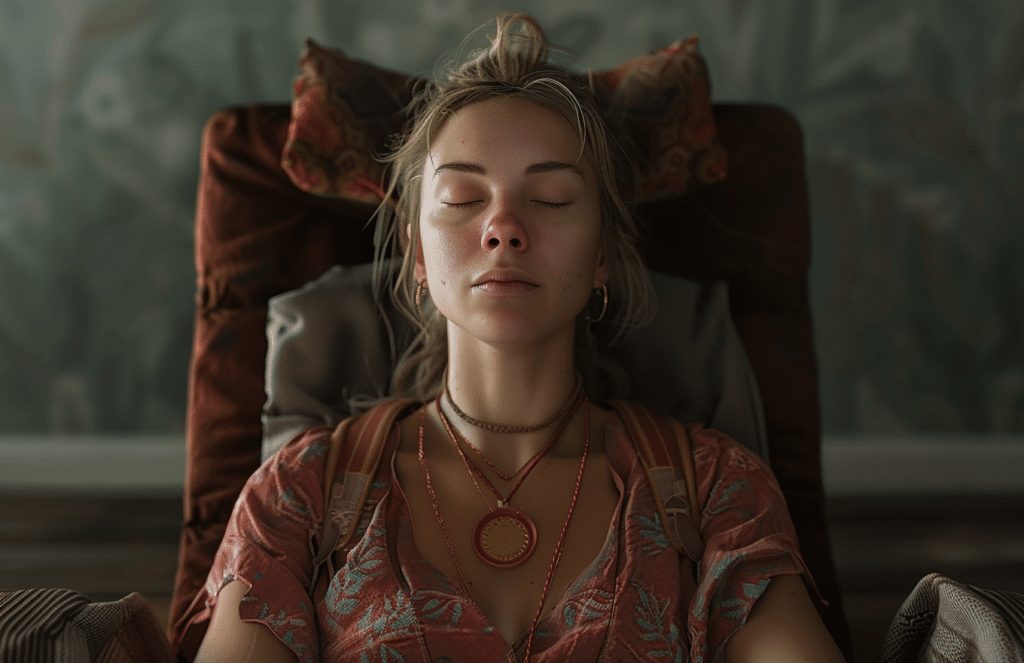
If muscle tension prevents you from keeping your back upright or causes you to hunch, don't worry — maintain stillness in whatever position is possible for you and all those tensions will fade away as if by magic, and in time you will be able to sit with a straight back without feeling any discomfort.
A straight back promotes the correct flow of energy through the spine. Just like stillness, keeping the back straight becomes easier with practice. Don't be discouraged if you suffer from ailments that compromise your posture, meditation will become a balm for any physical or psychosomatic problem.
Much is said about the benefits of meditation for mental health, but very little is said about the incredible physical changes experienced by the person who meditates regularly. This is largely due to the relaxing effect it has on our nervous system — the mind calms down and this allows the body to soften, releasing tensions that have accumulated over years.
3. Focusing the mind
This is where we find thousands of meditations, because there are thousands of ways to focus the mind. At this point my great advice is to experiment with as many as possible; this way it will be easier to discover which meditation suits you best. We can distinguish two broad groups: outward meditation and inward meditation.
MEDITATING WITH INTERNAL OBJECTS
Anapana – Focusing on the breath
Focusing attention on the breath is the grounding practice of every meditator. Regardless of the meditation you practice, this is a technique common to all schools of meditation. We could say it is the foundation upon which we build our capacity for attention.
Although it may seem easy, focusing on the flow of the breath without controlling it requires many years of practice to be able to sustain it during long meditation sessions. For people who are just starting out it can be very boring, so I don't recommend it for those taking their first steps in the world of meditation.
Vipassana – Focusing on bodily sensations
This is one of the most advanced meditation techniques and I advise no one to start with it because due to its difficulty it is easy to become frustrated and give up. However, as you advance in your practice, and your capacity for concentration and stillness develops, this is a meditation worth considering.
What does it consist of? This meditation focuses on feeling the body, passing attention through each and every part that makes it up, and finally being able to feel our entire physical structure at the same time.
Reciting a mantra
One of the easiest ways to focus the mind is through the constant repetition of a phrase or word. You can use phrases with a specific meaning or make up a word with no meaning at all and repeat it endlessly. It is a very effective way to hack the constant flow of looping thoughts in your mind.
It is a technique suitable for beginners and for those with years of practice. Personally it is not a meditation technique I practice frequently because, honestly, I find it boring very easily, but you might try it and love it, so always give it a chance before ruling it out.
Visualization
Visualization is the technique I recommend for starting out in meditation. You can use a guided meditation or try to visualize a landscape, a figure you admire, an object you cherish… Personally I believe that guided meditations are an excellent way to enter the world of meditation, since it is easier to maintain concentration when you receive instructions than when the mind faces silence.
On YouTube there are plenty of guided meditations; among those I recommend are the Joe Dispenza meditations; they have different levels so you can progress gradually, and they are exceptional.
MEDITATING WITH EXTERNAL OBJECTS
Unlike the meditations in the previous section, when we meditate with external objects the eyes remain open. And this is another of the techniques I recommend for getting started in meditation. In this case we need to choose an object to make it the object of our meditation. We could distinguish between two broad groups: nature and objects.
Nature
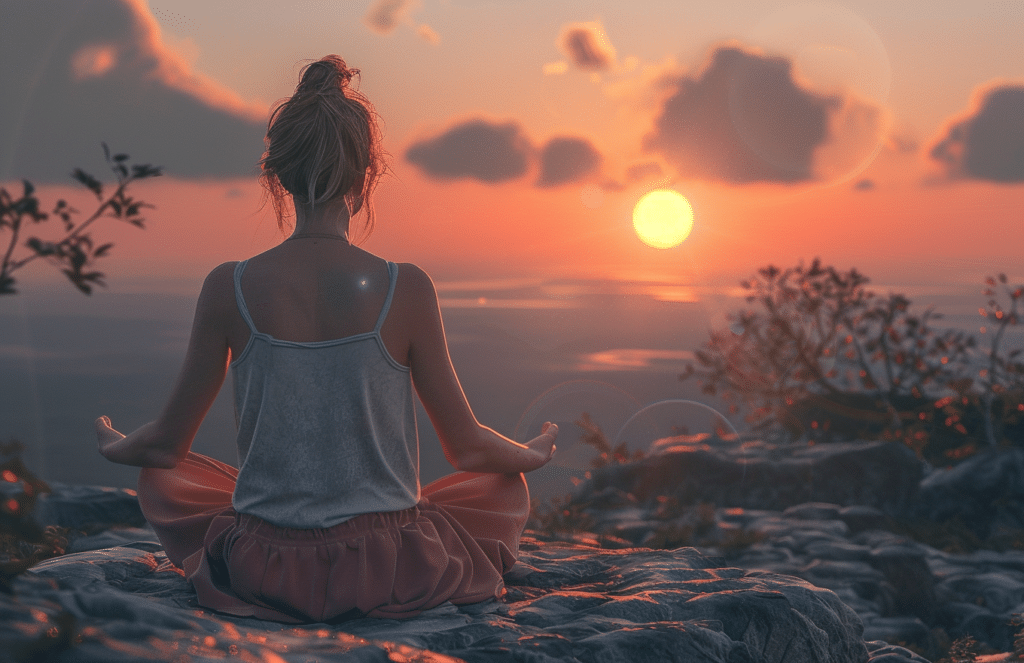
Despite the appeal of meditating in front of a sunset, a sunrise, or a landscape, this can be an environment with too many distractions for those who are just starting out. And don't misunderstand me — I wholeheartedly recommend this type of meditation at whatever level you are at, but keep in mind that until your concentration has developed sufficiently, a breeze or the song of a bird will be enough to divert your attention.
Objects
Another way to meditate is to focus our attention on an object until we enter into symbiosis with it. To do this you can choose an object in your room and gaze at it intently until you see only that object and the rest of the room has disappeared. A candle can be a perfect object with which to start experimenting with this type of meditation; the flame tends to have a hypnotic effect that facilitates concentration.
Another approach I recommend, although it may not be very orthodox, is meditating while watching audiovisual content that interests us. From a film to a YouTube video or a podcast, these can be the object of our meditation. This, along with guided meditations, is the most accessible way to begin meditating.
It is about learning to focus the mind, and sometimes the best way to do this is by giving our brain information it finds interesting. What matters here is to adopt a position and hold it without moving the body until the video ends or until halfway through the film. If you are a film lover like me, this is an incredible strategy for meditating without it feeling like an effort.
How can meditation affect my life?
When you make meditation a daily practice it will become a lifestyle. Having the capacity to regulate your own nervous system will make you a freer, more self-confident individual, capable of making firm decisions for your own well-being. Your relationship with yourself will improve significantly — you will speak more kindly to yourself and accept yourself for who you are, and let us not forget that the relationship with oneself is the most important one and we often forget to nurture it.
As you establish your meditation routine, your value system may change dramatically, as may your interests, and this can feel disruptive at first. With the practice of meditation, our perspective of the world and our self-awareness expand, and we are confronted with the limiting beliefs and harmful habits that govern our day-to-day lives.
With this I do not want to instill any fear regarding meditation, but rather to highlight the transformative power of this practice, whose daily practice will inevitably have a purifying effect on your life by making you aware of the patterns that are limiting it. It is the most powerful tool that exists for freeing oneself from old conditionings and the expectations that keep us projected into the future.
In short, I recommend that you explore all these meditation techniques and focus on the one that resonates most with you. On the other hand, it is important that you find a mentor to guide you as you progress in your practice. Accompaniment is one of the most important factors in not abandoning the practice and not feeling alone on this path of self-discovery. If you are interested in learning meditation from scratch with a teacher, here is the link to my classes 🙂