


Meditation is an ancient practice that has been embraced by people all over the world in search of inner peace and mental well-being. Although it may seem challenging, especially for those who lead a busy life, meditating at home is an accessible and beneficial option. This article will offer you a comprehensive guide on how to meditate at home, including practical tips, effective techniques, and the importance of this practice in your daily life.
Why meditate at home?
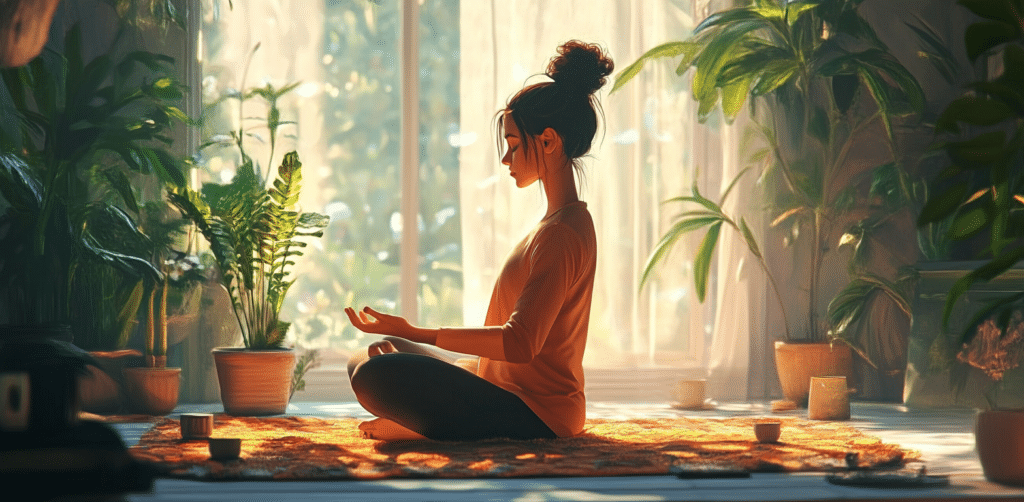
Meditating at home offers a range of benefits that can transform your everyday life. Here are some of them:
- Stress reduction: Meditation can help calm the mind and reduce anxiety, resulting in a more balanced and less stressful life.
- Improved concentration: Regular meditation practice fosters mindfulness, which can enhance your focus and productivity across various areas of your life.
- Increased emotional well-being: Meditating helps cultivate positive emotions such as gratitude, compassion, and joy.
- Access to spirituality: For those seeking a spiritual path, meditation can be a powerful tool for connecting with your inner self and exploring your spirituality.
- Flexibility of time and space: Meditating at home allows you to choose when and where to practice, adapting meditation to your lifestyle.
Preparing to Meditate
1. Find Your Motivation
Before you begin, reflecting on your reasons for meditating can make the practice more meaningful and effective. Identifying the "why" behind your intention — such as reducing stress, improving concentration, or cultivating a deeper spiritual connection — will help you choose the technique that best suits your needs. For example, if you are looking to manage stress, you might try a guided relaxation meditation; if you are interested in improving concentration, you might opt for mindfulness meditation, focused on the breath and the present moment. Having a clear motivation can keep you committed and help you notice the benefits as you progress.
2. Choose a Suitable Space
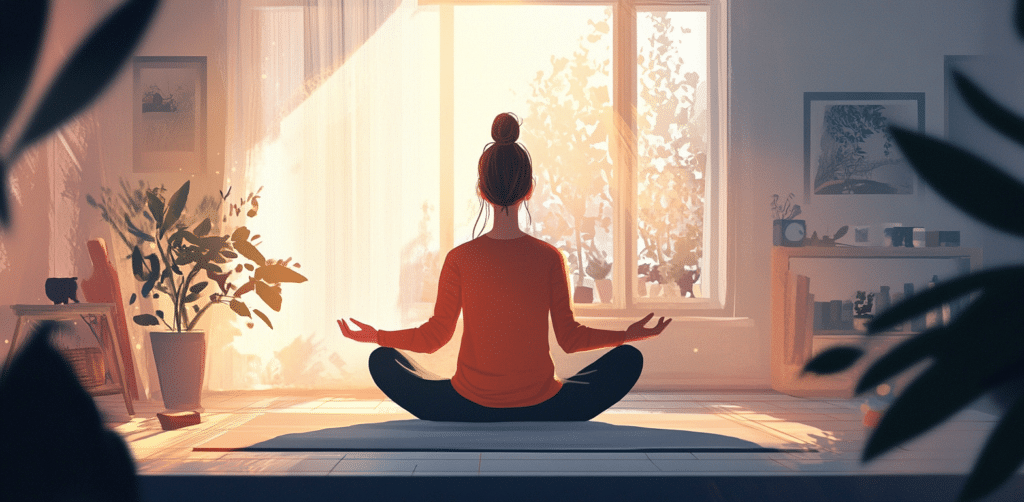
Find a place in your home where you can meditate without distractions. It doesn't need to be large or sophisticated; what matters is that it is a space where you feel comfortable and at ease. This could be a corner of the living room, a part of your bedroom, or even the garden if you prefer the outdoors. Make sure the space is clean and tidy, as the physical environment can influence your mental state. If you meditate regularly in the same place, this space can take on an atmosphere of calm and familiarity that eases the transition into a meditative state.
3. Create a Conducive Atmosphere
A welcoming atmosphere can make your meditation session more enjoyable and relaxing. Use cushions or blankets that allow you to sit comfortably, or a chair if you prefer support. You can also add elements such as candles, incense, or essential oils that provide a soft and pleasant fragrance. Even soft music or sounds from nature can help you disconnect from outside noise and focus on your practice.
4. Establish a Routine and Make It Part of Your Day
An important step toward consistency is including meditation in your daily routine. Whether in the morning to start the day calmly or in the evening to release the day's tensions, choosing a specific time will help you incorporate the practice naturally. For example, you might decide to meditate just before breakfast or when you arrive home after work. This regularity reinforces the habit and makes meditation an essential part of your everyday life.
How to Begin Meditating
Basic Meditation Techniques
There are many ways to meditate, but here are some basic techniques that are ideal for beginners:
- Mindfulness meditation: This technique involves focusing your attention on the present moment. You can concentrate on your breath, observing how air enters and leaves your body.
- Mantras: Softly repeat a word or phrase — aloud or in your mind — that inspires you. This will help center your attention and keep the mind focused.
- Guided meditation: Use recorded guided meditations available online. These sessions can provide you with structure and direction, especially if you are new to the practice.
- Movement meditation: Practicing yoga or tai chi are forms of movement meditation that can help you connect body and mind.
Begin with Short Sessions
It is advisable to start with short sessions of 5 to 10 minutes. As you become more comfortable, you can gradually increase the time. The quality of the meditation is more important than the duration, so focus on being present and on the experience rather than watching the clock.
Establish a Routine
Consistency is key to developing a meditation practice. Try to meditate at the same time every day — whether in the morning to start the day calmly, at lunchtime to clear your mind, or in the evening to relax before sleep. Find the time that works best for you and make meditation a part of your daily routine.
Choose a Comfortable Position
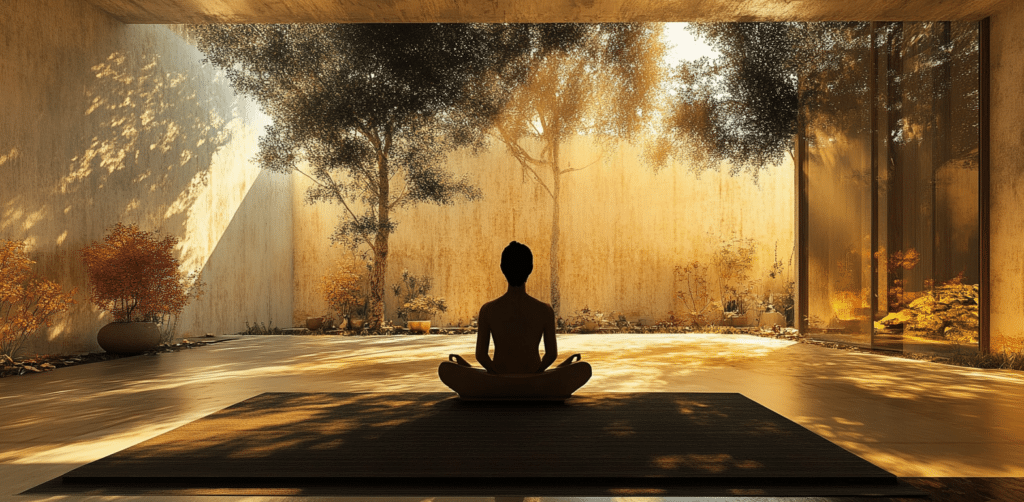
Posture is fundamental in meditation. You can sit on the floor with your legs crossed, in a chair with your feet flat on the ground, or even lie down, as long as your back is straight. The important thing is that you feel comfortable and can maintain your attention without physical distractions.
Meditation Techniques at Home
Anapana
The technique of Anapana, or breath meditation, is one of the simplest and most effective ways to begin meditating. This method centers on the observation of the natural breath, helping to calm the mind and improve concentration. Here is an advanced guide.
Step by Step to Practice Anapana
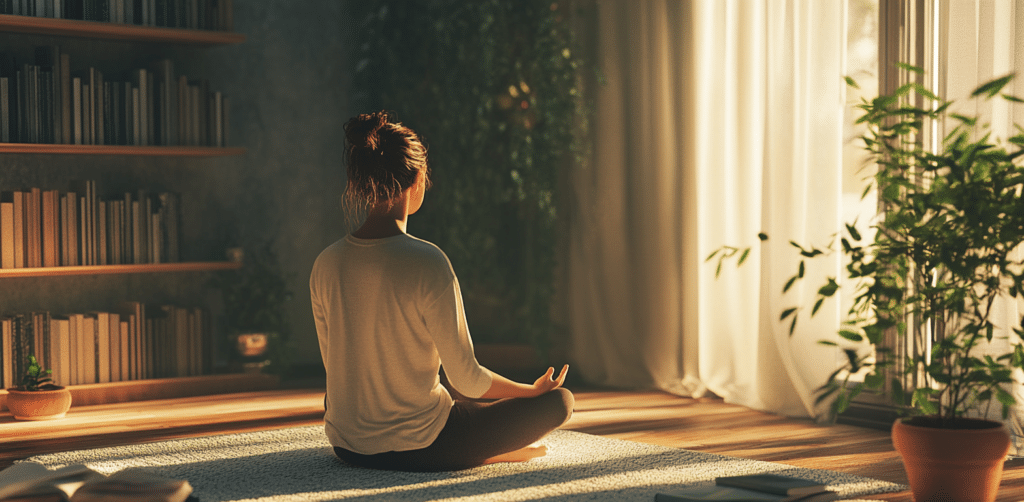
- Find a comfortable posture: Sit in a relaxed position, with your back upright but not rigid. You can sit on the floor with your legs crossed, on a cushion, or in a chair with your feet flat on the ground. Gently close your eyes and relax your body.
- Observe the breath: Bring all your attention to the flow of the breath, without trying to change or control it. Inhale deeply through the nose and observe how the air enters your lungs and expands your abdomen. Then exhale slowly and notice how the air leaves and your abdomen contracts. The idea is to observe each breath naturally, as a witness.
- Maintain your attention and return to it each time you become distracted: It is natural for the mind to wander and become distracted by thoughts, memories, or worries. When this happens, simply notice the distraction without judgment and bring your attention back to the flow of the breath. No matter how many times it occurs; the key is to return to the breath each time with patience and kindness toward yourself.
Benefits of Anapana
Anapana is especially useful for calming the mind and anchoring it in the present. By focusing attention on the breath, the speed of thoughts slows down and a sense of tranquility is generated that can extend well beyond the meditation session. Over time, this simple practice can help reduce anxiety, improve mental clarity, and increase emotional resilience.
Example for Beginners
Suppose you have a busy day and your mind is full of thoughts. Dedicate just five minutes to practicing Anapana: sit in a quiet place, close your eyes, and observe your natural breath. At first, your mind may wander several times during those five minutes, but each time you notice it, bring your focus back to your breath. At the end of this brief exercise, you will likely feel more relaxed and centered.
Advanced Tip
For those who wish to deepen their practice, it is helpful to focus on the sensations of the breath at a specific point, such as at the entry and exit of air through the nostrils. You will notice the temperature of the air as it enters and leaves, as well as the sensation of expansion and contraction. This level of detail increases concentration and helps deepen the meditation.
Practicing Anapana regularly, even for just a few minutes a day, can transform the way we respond to stress, improve our ability to concentrate, and develop a greater sense of inner peace.
Body Scan
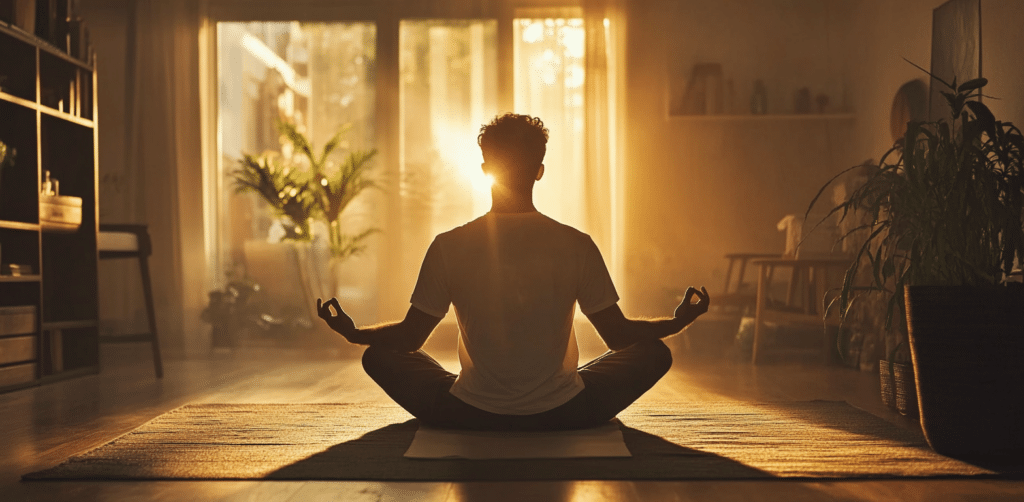
The body scan is a meditation technique that involves consciously bringing attention to each part of the body, starting from the head down to the feet (or vice versa). This exercise not only helps relax the body, but also fosters a deep connection between mind and body and enhances the perception of physical and emotional sensations.
How to Practice the Body Scan
- Find a comfortable position: You can do this practice sitting or lying down, according to your preference. Close your eyes to focus inward and breathe deeply a few times to relax before you begin.
- Begin at the top of the head: Bring your attention to the top of your head and observe any sensations you notice: it may be warmth, coolness, tension, or simply a feeling of calm. Do not try to change what you feel; simply observe it and accept it just as it is.
- Slowly descend to each part of the body: Move from the head to the forehead, the eyes, cheeks, jaw, and then continue downward to the neck, shoulders, arms, and hands. Stay aware of the sensations in each area before moving on to the next. You can spend a few seconds on each zone, allowing yourself to identify and release any accumulated tension.
- Release tension with the breath: Each time you notice tension or discomfort in a part of the body, breathe deeply and, as you exhale, imagine that you are releasing that tension. This step not only relaxes the body, but also helps dissolve emotional and physical blockages.
- Arrive at the feet: Once you reach the feet, take a few seconds to notice how you feel overall. You may perceive a sense of calm, lightness, or even a greater sense of connection with your body. End the practice with a few deep breaths and open your eyes when you feel ready.
Benefits of the Body Scan
The body scan practice increases self-awareness and helps you recognize how each part of the body feels. This is especially useful in moments of stress, when we are often unaware of the tension that accumulates in areas such as the shoulders or jaw. Through this technique, a state of deep relaxation is promoted, tension is reduced, and the capacity to identify and respond to physical and emotional needs is enhanced.
Practical Example
Imagine you arrive home after a long day of work. By doing a body scan, you may notice that you have tension in your neck and shoulders. By breathing into and consciously releasing that tension, you can experience immediate relief. This not only relaxes you physically, but also helps your mind disconnect from the day's worries.
Advanced Tip
As you become more familiar with the body scan, try to pay attention to more subtle sensations, such as the heartbeat or the natural movement of the chest while breathing. This growing sensitivity can help you develop a deeper connection with your body and identify any area that may need special attention, both physically and emotionally.
The body scan is a powerful tool for bringing calm and inner connection into our daily lives. By practicing it regularly, you can learn to respond more consciously to your body's signals and to live in a state of greater balance and well-being.
Overcoming Common Challenges
Distractions
It is normal for your mind to wander during meditation. Rather than becoming frustrated, recognize that this is part of the process. Each time you notice that your mind has drifted, simply bring your attention back to your object of meditation — whether it is the breath, a mantra, or your bodily sensations.
Physical Restlessness
If you feel discomfort or physical restlessness, try changing position or adjusting your posture. You can also start meditating in a chair if that feels more comfortable, and then try more traditional positions as you grow more confident.
Unrealistic Expectations
Do not pressure yourself to have profound or transcendent experiences right from the start. Meditation is an ongoing process, and each session can be different. The key is to practice regularly and to be kind to yourself along the way.
Meditation and Technology
In the digital age, technology has become a valuable resource for those who wish to meditate or deepen their practice. Numerous apps and online platforms not only offer guided meditations, but also tracking tools, supportive communities, and educational content that facilitate personal growth and consistency. Below, we explore some of the most popular options, along with examples of how they can enrich your meditation experience:
- Headspace: Ideal for both beginners and advanced practitioners, Headspace offers a wide variety of guided meditations and courses on specific topics such as stress reduction, sleep, or anxiety management. Its structured approach and attractive visual interface also make it easy to establish a daily routine. For example, those who struggle to sleep well can use its "Sleepcasts" series — guided meditations that induce a state of deep calm and prepare the mind for rest.
- Calm: Calm focuses on providing a relaxing environment through nature sounds, soft music, and meditations tailored to moments of stress or anxiety. A unique feature is its library of "Sleep Stories," narrated by familiar voices, which help relax the mind before sleep. This option is excellent for those seeking a complete sensory experience in meditation, as they can combine meditations with sounds and visualizations that induce a state of calm.
- Insight Timer: With one of the most extensive libraries of guided meditations, Insight Timer is popular among those who wish to explore different styles and techniques. Its customizable meditation timer is useful for those who prefer to meditate in silence or with soft background sounds. The app also features an active community that allows users to participate in interest groups, such as "Mindfulness for Anxiety" or "Meditation for Self-Care." This makes it possible to connect with other meditators, share experiences, and receive support, which can be especially valuable for those who practice alone and are looking for a sense of community.
Tools for Deepening Practice and Tracking Progress
Many of these apps also include tracking tools that allow you to record the duration and frequency of sessions, and even your mood before and after practice. This can be helpful for those who wish to observe how meditation influences their emotional well-being over time. For example, if you notice that you feel calmer after each session and that this feeling persists, you will be able to see how regular practice contributes positively to your mental and emotional health.
Global Connection and Community
Technology also makes it possible to connect with a global network of people who meditate, which can be motivating and enriching. Insight Timer, for example, allows you to see how many people are meditating at that very moment and to send or receive messages of encouragement. This sense of community can strengthen motivation and help maintain a regular practice, especially for those seeking a sense of belonging.
In conclusion, technology has made meditation more accessible and versatile, offering each person the opportunity to adapt their practice to their own needs, schedules, and preferences. With a variety of tools at your fingertips, integrating meditation into everyday life becomes a more attainable and enriching goal.
Meditating at home is an accessible practice that can bring a wealth of benefits to your life. By finding your motivation, creating a suitable space, and establishing a routine, you can enjoy the peace and mental clarity that meditation offers. Remember that there is no single correct way to meditate; what matters is finding an approach that resonates with you and helps you connect with yourself.
So take some time for yourself, breathe deeply, and begin your journey into meditation at home. Every small step counts, and over time you will discover how this practice can transform your daily life into something more meaningful and balanced. Happy meditating!