


Aromatherapy and yoga are two ancient practices that have been used for centuries to improve physical, mental, and emotional health. When combined, they can create a profound and transformative experience. In this article, we will explore how aromatherapy can enhance your yoga practice, the benefits of using incense and essential oils, and how to choose and use these aromas effectively.
What is Aromatherapy?
Aromatherapy is the use of essential oils and other aromatic plant compounds to improve health and well-being. These oils are extracted from flowers, leaves, bark, and roots, and each one has unique therapeutic properties. Inhaling these aromas can influence mood, reduce stress, improve concentration, and promote relaxation.
The Origins of Aromatherapy in Yoga
The use of aromas in yoga practice has deep roots in ancient Hindu and Buddhist traditions. These practices originated thousands of years ago, and the use of incense and essential oils has been an integral part of religious and spiritual rituals in these cultures. In Hinduism, aromas are used to purify the air and the sacred space, creating an atmosphere conducive to meditation, prayer, and yoga practice. Hindu temples are often steeped in the fragrances of sandalwood, jasmine, and other incenses, which are believed to elevate the spirit and facilitate connection with the divine.
In Buddhism, incense also plays a crucial role. It is used in ceremonies and meditations to symbolize the impermanence of life and the dissolution of the ego. Buddhist monks burn incense to honor the Buddha and to help practitioners concentrate and find inner peace. This tradition has significantly influenced the way yoga is practiced today, integrating the use of aromas as a tool to enhance the spiritual and physical experience.
Furthermore, the practice of aromatherapy in yoga is supported by Ayurveda, the traditional medicine system of India. According to Ayurveda, each plant and essence has specific properties that can balance the doshas (vital energies) in the body. For example, essential oils such as sandalwood and lavender are used to calm the nervous system and reduce stress, while eucalyptus and peppermint can energize and improve mental clarity.
The combination of these aromatic elements with yoga practice not only helps to purify and prepare the physical space, but also prepares the mind and body for a deeper and more conscious experience. Aromas work through the olfactory system, sending signals to the brain that can alter mood, reduce anxiety, and improve concentration. This creates a perfect synergy between body, mind, and spirit, making aromatherapy an ideal complement to any yoga practice.
Benefits of Aromatherapy in Yoga
Relaxation and Stress Reduction
One of the main benefits of aromatherapy in yoga is its ability to induce relaxation and reduce stress. Aromas such as lavender, chamomile, and sandalwood are well known for their calming properties. These aromas can help lower blood pressure, decrease heart rate, and relax the muscles, creating an ideal state for yoga practice.
Improved Concentration
Certain aromas, such as lemon, peppermint, and rosemary, can improve concentration and mental clarity. These essential oils are perfect for yoga practices that require sharp mental focus, such as Ashtanga or Vinyasa. Inhaling these aromas can help keep the mind alert and reduce distraction.
Mood Elevation
Aromatherapy can also be used to lift the mood and combat depression and anxiety. Aromas such as bergamot, orange, and mandarin are well known for their uplifting properties. Incorporating these essential oils into your yoga practice can help create a sense of joy and well-being.
Space Purification
Incense and essential oils can also purify the space in which you practice yoga. Using aromas such as eucalyptus, tea tree, and cedar can eliminate bacteria and viruses in the air, creating a cleaner and healthier environment for your practice.
How to Incorporate Aromatherapy into Your Yoga Practice
Choosing Incense and Essential Oils
Selecting the right aromas for your yoga practice is crucial to maximizing their benefits. Here are some detailed recommendations and how to use them:
- Lavender: For relaxation and stress relief
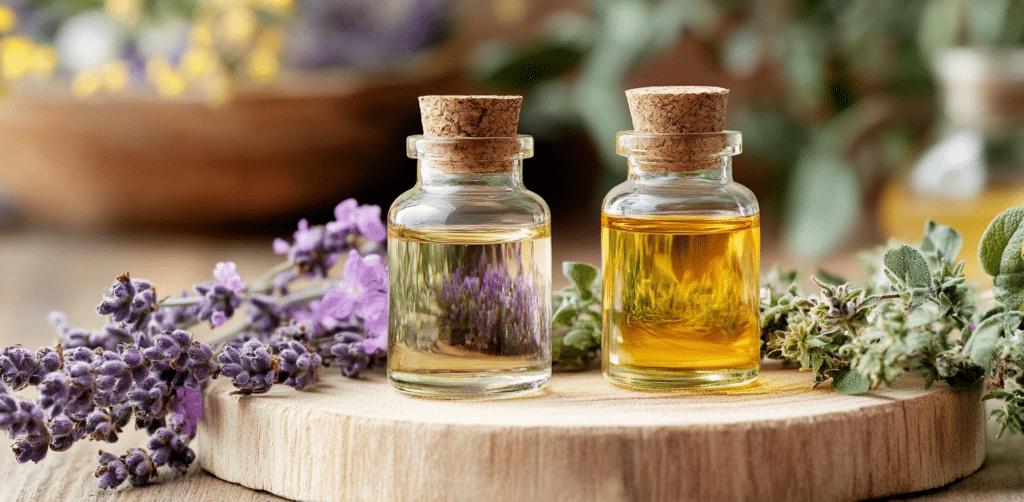
Lavender is well known for its calming properties. You can use lavender essential oil in a diffuser during your yoga practice to create an atmosphere of tranquility. You can also apply a drop to your wrists or temples to inhale its aroma directly. This is especially useful during restorative yoga sessions or before Savasana.
- Peppermint: For improved concentration and mental clarity
Peppermint is refreshing and stimulating. It is ideal for yoga practices that require focus and energy, such as Vinyasa or Ashtanga. Place a few drops of peppermint essential oil on a handkerchief and breathe deeply before beginning, or use a diffuser to spread its aroma throughout the room. This helps clear the mind and sharpen attention.
- Sandalwood: For meditation and spiritual connection
Sandalwood has an earthy aroma that is commonly used in meditative practices. You can use sandalwood incense sticks during meditation to create a sacred atmosphere. You can also apply sandalwood oil to your pulse points to foster a deeper connection with your inner self during yoga practice.
- Orange: For mood elevation and increased energy
Orange essence is energizing and uplifting. It is perfect for morning yoga practices or whenever you need an energy boost. Diffuse orange essential oil in the room or add a few drops to your bathwater before practicing. This helps revitalize your spirit and lift your mood.
- Eucalyptus: For purifying the air and improving breathing
Eucalyptus is excellent for opening the airways. It is ideal for Pranayama practices (breathing techniques) and therapeutic yoga. You can add a few drops of eucalyptus essential oil to a diffuser to cleanse the air, or inhale it directly from your hands. This facilitates deeper, clearer breathing, improving the quality of your practice.
Using Incense
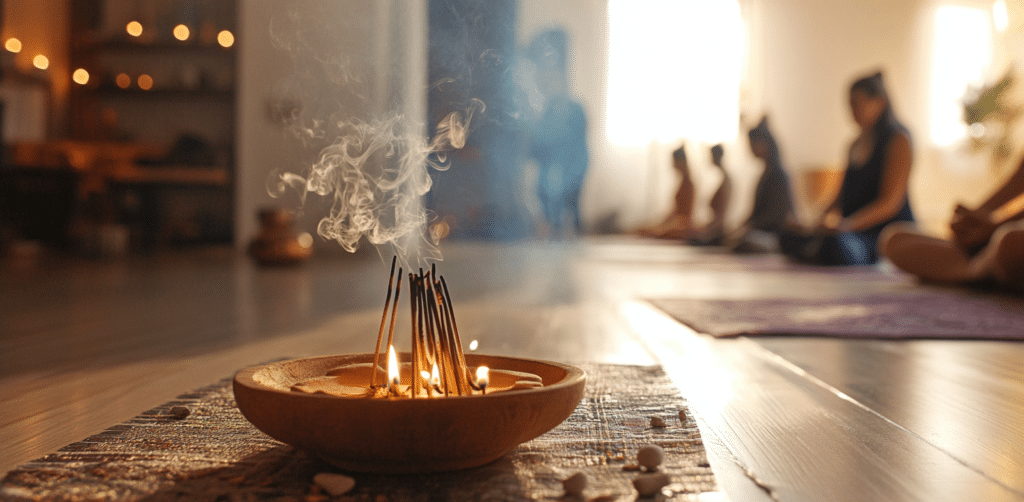
Incense can be a powerful tool in yoga practice. Here are some tips for its use:
- Light the incense before beginning your practice: This allows the aroma to fill the space and create an appropriate atmosphere.
- Ventilate the space adequately: Although incense has many benefits, it is important to ensure good ventilation to avoid a build-up of smoke.
- Choose high-quality incense: Opt for natural incense made with pure ingredients and avoid those with synthetic fragrances.
Using Essential Oils
Essential oils can be used in several ways during yoga practice:
- Diffusers: Use a diffuser to disperse the aroma into the air during your practice.
- Topical application: Mix essential oils with a carrier oil and apply them to your wrists, neck, or the soles of your feet before beginning.
- Yoga spray: Create a spray with water and a few drops of essential oil to mist your mat and the space around you.
Precautions and Tips
- Product Quality: Make sure to use high-quality essential oils and incense sticks, preferably organic and free from chemical additives. Low-quality products may contain toxic substances that can be harmful to your health.
- Ventilation: Burn incense in well-ventilated areas to avoid a build-up of smoke. Proper ventilation ensures that the aromas do not become overwhelming and that the air circulates freely.
- Moderation: Use aromas in moderation. Excessive incense or essential oils can cause headaches or irritation. Find the balance that works best for you and your practice.
Incorporating aromatherapy into your yoga practice can transform your experience, providing a more relaxing, energizing, or meditative atmosphere according to your needs. Experiment with different aromas and methods to discover what best complements your practice and enhances its benefits.