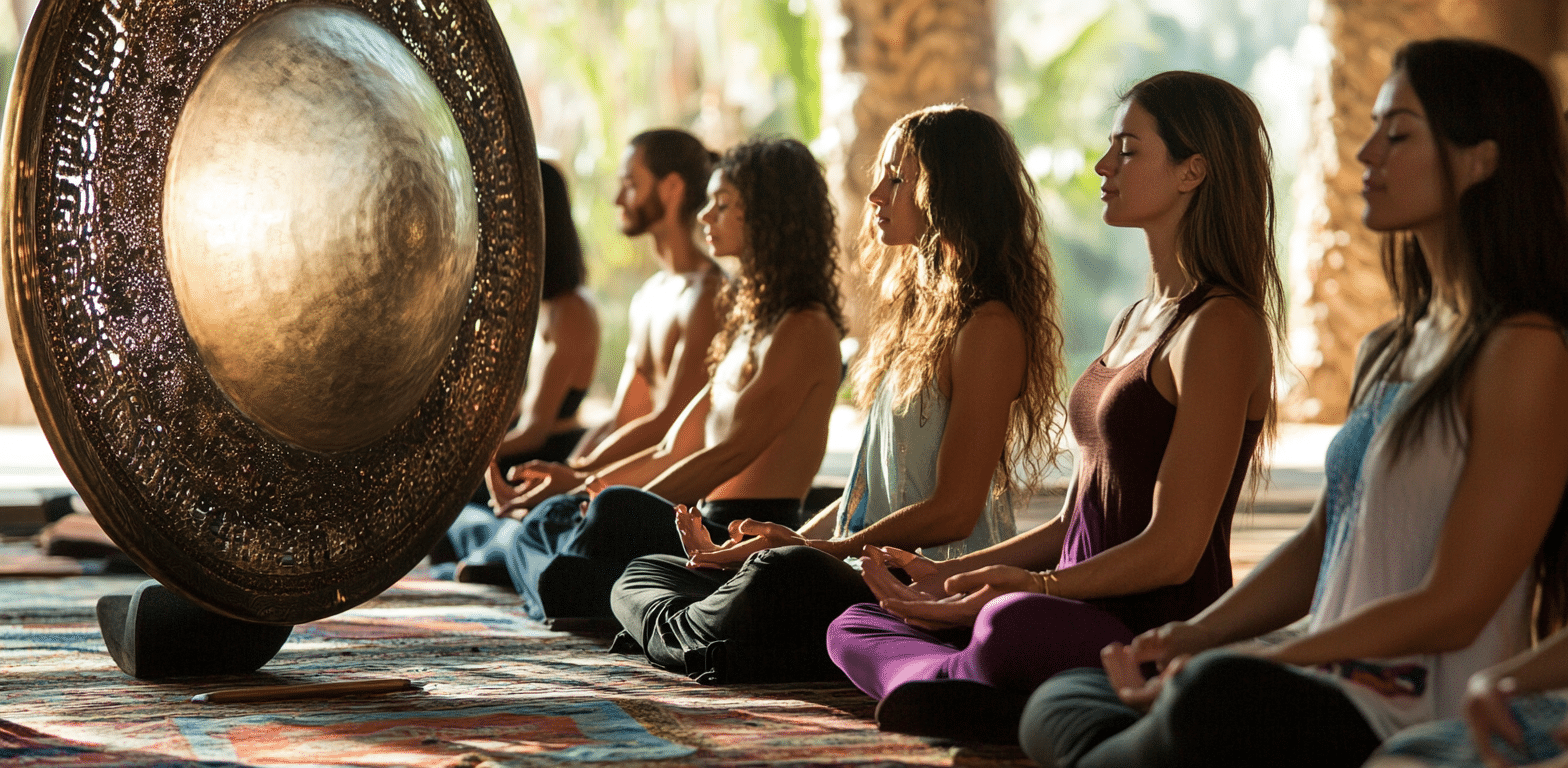



Yoga, with its roots in antiquity, has evolved over the centuries, adapting to the needs and priorities of each generation. Today, the different branches of yoga offer us valuable tools for facing the challenges of modern life, providing physical, mental, and spiritual well-being. Below, we will explore the main branches of yoga and how we can integrate them into our daily routine.
Hatha Yoga
Hatha Yoga focuses on physical postures (asanas) and the conscious control of breathing (pranayama). It is a traditional form of yoga that seeks to balance and align body, mind, and spirit through physical and respiratory practices. The term «hatha» derives from the Sanskrit words «ha» (sun) and «tha» (moon), symbolizing the union of opposing yin-yang energies within the individual.

Modern Application:
1. Improvement of Physical Health:
- Flexibility and Strength: Hatha Yoga postures help improve muscular flexibility and bodily strength, working all muscle groups to maintain balance and prevent injury.
- Improved Posture: By practicing asanas that promote correct body alignment, Hatha Yoga helps improve posture and relieve physical tensions accumulated during the day.
- Muscular and Joint Health: It strengthens supporting muscles and promotes joint health, which is especially beneficial for those who suffer from lower back pain or other musculoskeletal problems.
2. Stress Reduction and Improved Mental Well-Being:
- Relaxation and Anxiety Reduction: The focus on conscious breathing and postures that promote mental balance and stability helps reduce stress and anxiety.
- Improved Emotional Well-Being: Regular practice of Hatha Yoga fosters emotional well-being by facilitating the release of emotional tensions and promoting a state of calm and mental clarity.
3. Accessibility and Suitability for Beginners:
- Wide Availability of Classes: Hatha Yoga classes are commonly accessible at yoga studios, gyms, and online, making it ideal for beginners who wish to explore yoga.
- Focus on Basic Fundamentals: Hatha Yoga instructors typically focus on teaching the basic fundamentals of postures and breathing, providing a solid foundation for those beginning their yoga journey.
Additional Benefits:
- Promotion of Body Awareness: Through mindful attention to postures and breathing, Hatha Yoga improves body awareness and the mind-body connection.
- Support for Respiratory Health: Conscious breathing techniques in Hatha Yoga strengthen the respiratory muscles and improve lung capacity.
How to Integrate Hatha Yoga into Daily Life:
- Regular Practice: Dedicate time to practicing Hatha Yoga consistently, ideally several times a week to obtain optimal benefits.
- Listening to the Body's Needs: Learn to listen to your body's signals during practice, adapting postures as necessary to avoid injury and maximize benefits.
- Combination with Other Forms of Yoga: Combine Hatha Yoga with other forms of yoga or physical activities to maintain a comprehensive balance in your wellness routine.
Bhakti Yoga
Bhakti Yoga is the Yoga of devotion and love toward a higher power. It is based on the total surrender of heart and mind to a deity, a divine concept, or the spiritual manifestation of the sacred. This form of yoga emphasizes the cultivation of love and devotion as a path toward spiritual realization and union with the divine.

Modern Application:
1. Fosters Spirituality and Sense of Purpose: Bhakti Yoga is a profound practice that fosters spirituality and helps find a sense of purpose in life through devotion and selfless service. By focusing on love and connection with the divine, this form of yoga nourishes the soul and strengthens the relationship with the sacred.
2. Common Practices of Bhakti Yoga:
- Chanting of Mantras: The repetition of sacred mantras, such as the maha-mantra Hare Krishna, is a central practice in Bhakti Yoga. Chanting mantras helps purify the mind and heart, creating a spiritual vibration that facilitates connection with the divine.
- Participation in Devotional Ceremonies: Attending religious or spiritual ceremonies, such as arati (a worship ceremony with lamps) and kirtan (devotional chanting), where devotion is expressed and the bond with the sacred is strengthened.
- Service to the Community: Selfless service (seva) toward others is considered a way of expressing love and devotion toward the divine. This can include activities such as helping in community kitchens, caring for those in need, or participating in social service projects.
3. Development of Deep Connection and Cultivation of Virtues: Bhakti Yoga promotes the development of qualities such as unconditional love, compassion, humility, and gratitude. These virtues not only strengthen human relationships but also deepen the spiritual connection with the divine.
Benefits of Bhakti Yoga:
- Inner Peace and Happiness: The practice of Bhakti Yoga can lead to experiencing a profound sense of inner peace and joy by developing a more intimate connection with the sacred.
- Reduction of Stress and Anxiety: Focusing on devotion and love toward the divine can relieve stress and anxiety by providing a sense of purpose and meaning beyond everyday concerns.
- Personal Transformation: Bhakti Yoga facilitates spiritual growth and personal transformation by purifying the heart and mind, leading to greater inner and outer harmony.
How to Integrate Bhakti Yoga into Daily Life:
- Cultivate Daily Devotion: Dedicate time each day to practicing devotion and connection with the divine through chanting mantras, prayer, or meditation.
- Practice of Gratitude: Develop an attitude of gratitude toward life and its experiences, recognizing the presence of the sacred in every moment.
- Selfless Service: Seek opportunities to serve others with love and compassion, recognizing the divinity in all people.
Karma Yoga
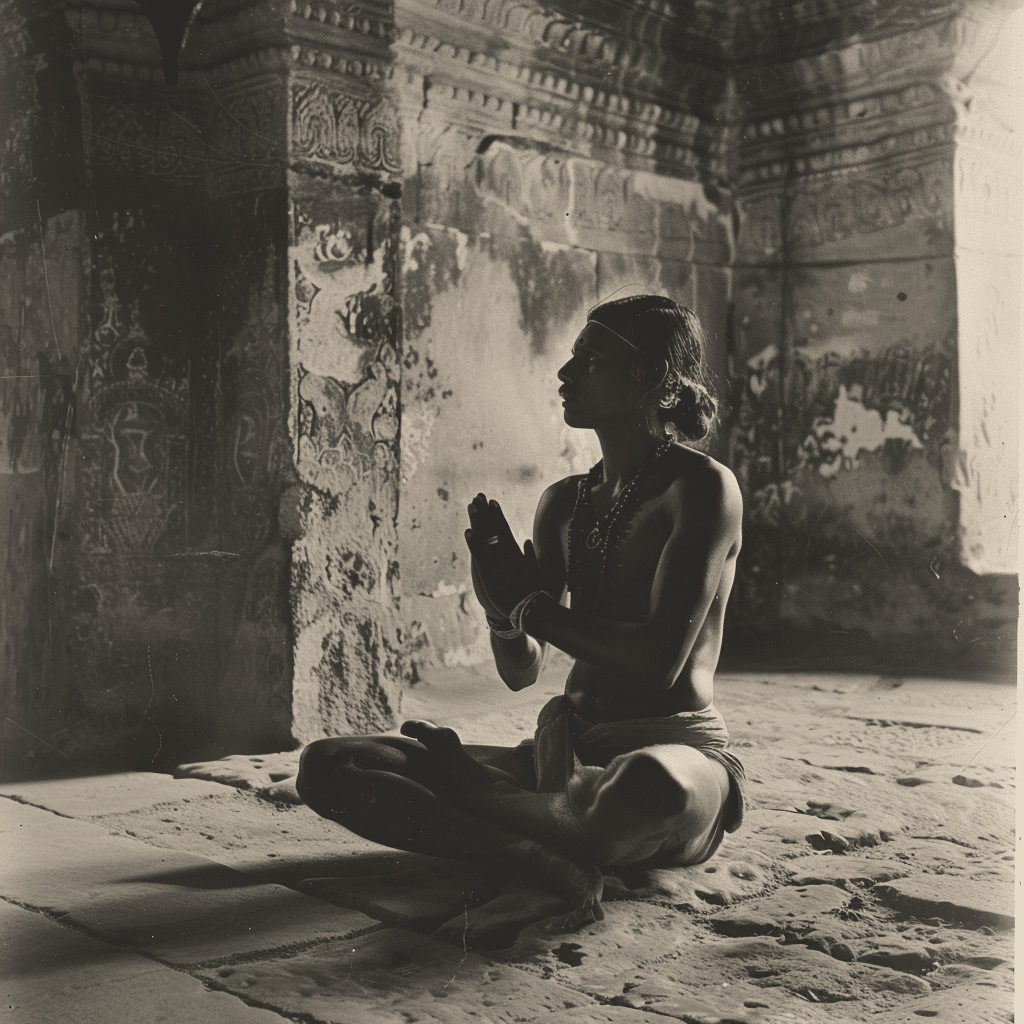
Karma Yoga is the Yoga of selfless action. It is based on the philosophy of carrying out our daily activities with an attitude of detachment from results, focusing on service to others and collective well-being. This practice is deeply rooted in the teachings of the Bhagavad Gita and forms an integral part of the spiritual path of yoga.
Modern Application:
1. Promotes service to others and altruism: Karma Yoga motivates us to seek opportunities to help others in a selfless way. This can manifest through direct actions such as volunteering, supporting social causes, or simply being available to someone who needs help.
2. Strengthens community and cultivates humility: By focusing on service and contributing positively to our community, Karma Yoga promotes a sense of belonging and responsibility toward others. It fosters cooperation and mutual care, building a support network that strengthens social and emotional bonds.
3. Actions without attachment to results: The practice of Karma Yoga involves carrying out our actions with dedication and commitment, but without clinging to expected outcomes. This frees our mind from expectations and allows us to accept situations as they arise, thereby cultivating patience and acceptance.
4. Develops an attitude of service and generosity: By practicing Karma Yoga, we cultivate a mindset of service toward others. This not only makes us more sensitive to others' needs, but also helps us cultivate qualities such as compassion, empathy, and kindness.
Personal and Social Benefits:
- Self-knowledge: Karma Yoga invites us to reflect on our actions and motivations, promoting greater self-knowledge and personal growth.
- Stress reduction: By focusing on service and the well-being of others, we reduce stress related to personal and egocentric concerns.
- Strengthening the community: By collaborating on altruistic projects, we strengthen social cohesion and contribute to the building of a more united and supportive community.
How to Integrate Karma Yoga into Daily Life:
- Mindful practice: Before each action, reflect on how you can carry it out with the intention of benefiting others.
- Volunteering and participation: Participate in community activities, social aid projects, or simply help your neighbors and friends when they need it.
- Cultivate compassion and empathy: Be aware of the needs and feelings of others, and act from a place of understanding and solidarity.
Jnana Yoga
Jnana Yoga is the Yoga of knowledge and wisdom. It focuses on intellectual study, deep reflection, and self-exploration as pathways toward spiritual realization and self-knowledge. This form of yoga is deeply rooted in the teachings of the Upanishads and in Vedanta philosophy.

Modern Application:
1. Fosters self-exploration and philosophical study: Jnana Yoga promotes rigorous investigation into the nature of reality and the meaning of existence. It involves the study of sacred texts such as the Upanishads, Bhagavad Gita, and other philosophical and spiritual treatises. This deep study not only broadens our intellectual knowledge, but also helps us question and explore our fundamental perceptions and beliefs.
2. Develops a deeper understanding of oneself and the world: Through reflection and contemplation, Jnana Yoga invites us to explore who we are beyond our superficial identifications and to understand the interconnection between the individual and the universe. This practice leads us to discover the ultimate truth and to transcend the limitations of the mind and ego.
3. Methods of practice in Jnana Yoga:
- Listening to teachings: Participating in philosophical discussions and listening to the teachings of spiritual masters who have delved deeply into universal truths.
- Reading sacred texts: Studying and meditating upon the classical texts of spiritual wisdom to expand understanding and perspective.
- Contemplation and self-inquiry: Reflecting on fundamental questions about existence, the nature of being, and the relationship between the individual and the divine.
- Practice of discrimination (Viveka): Developing the capacity to discern between the temporal and the eternal, the real and the illusory, in order to attain the ultimate truth.
Benefits of Jnana Yoga:
- Mental clarity and discernment: Developing a clear mind and sharp discernment to understand the nature of reality and make informed decisions in daily life.
- Inner peace and spiritual realization: Attaining a state of inner peace and spiritual realization by discovering the ultimate truth beyond the limitations of the ego and the conditioned mind.
- Connection with universal wisdom: Feeling a deep connection with universal wisdom that transcends individual and cultural differences.
How to Integrate Jnana Yoga into Daily Life:
- Consistent practice: Dedicate time regularly to studying, reflecting, and meditating upon spiritual teachings.
- Open and receptive mind: Maintain an open and receptive mind to question and explore new ideas and concepts.
- Sincere search for truth: Be honest with yourself in your search for the ultimate truth and willing to question and transcend your own limiting beliefs.
Kundalini Yoga
Kundalini Yoga focuses on awakening spiritual energy through specific techniques designed to activate kundalini energy, which is considered a powerful and creative force residing at the base of the spine. This form of yoga is based on ancient Hindu texts and focuses on the expansion of consciousness and connection with the divine through dynamic and powerful practices.

Modern Application:
1. Spiritual and Energetic Practice: Kundalini Yoga is especially useful for those seeking a more spiritual and energetic practice. It combines physical postures (asanas), breathing techniques (pranayama), meditation, chanting (mantras), and mudras (symbolic gestures) to awaken and raise kundalini energy along the spine.
2. Activation of Kundalini Energy: Kundalini energy is represented as a coiled serpent at the base of the spine. Through specific practices in Kundalini Yoga, such as the use of pranayama, bandhas (energetic locks), and rhythmic movements, the aim is to awaken this energy and allow it to ascend through the main chakras, from the muladhara (root chakra) to the sahasrara (crown chakra).
3. Promotes Healing and the Expansion of Consciousness: By releasing and channeling kundalini energy through the chakras, Kundalini Yoga can facilitate physical, emotional, and spiritual healing. It is believed that this process not only strengthens body and mind, but also leads to greater mental clarity, expansion of consciousness, and a deep connection with the inner self and the divine.
Benefits of Kundalini Yoga:
- Energetic balance: It helps balance and harmonize the flow of vital energy (prana) in the body, promoting optimal health and overall well-being.
- Emotional strengthening: It facilitates the release of emotional blockages and the management of stress, promoting greater emotional stability and resilience.
- Spiritual development: It facilitates spiritual development by fostering a deep connection with one's own spiritual essence and the universe.
How to Integrate Kundalini Yoga into Daily Life:
- Regular practice: Dedicate time regularly to practicing Kundalini Yoga, even if it is only for a few minutes a day.
- Learning with an instructor: If possible, learn Kundalini Yoga techniques under the guidance of an experienced instructor who can ensure a safe and effective practice.
- Intention and Mindfulness: Maintain a clear intention throughout your practice and cultivate mindfulness to maximize the benefits of the techniques used.
Integrating Yoga into Modern Life
To fully enjoy the benefits of yoga in our modern era, it is essential to adapt its practices to our daily needs. Here are some practical suggestions:
- Incorporating Yamas and Niyamas: Practicing ethics and self-discipline in our daily interactions and personal decisions. For example, we can practice Ahimsa (non-violence) by being kind and understanding toward others, and Santosha (contentment) by cultivating gratitude in our everyday lives.
- Regular Asana Practice: Dedicating at least 15–30 minutes a day to yoga postures to keep the body flexible and strong. Choosing a variety of postures that address different areas of the body can help prevent muscular imbalances and promote optimal health.
- Pranayama Exercises: Practicing breathing techniques at the beginning and end of the day to improve focus and reduce stress. Practicing Pranayama during moments of anxiety or stress can provide a quick sense of calm and balance.
- Daily Meditation: Dedicating a few minutes each day to meditation to quiet the mind and develop greater clarity and inner peace. Even just a few minutes of meditation can have a significant impact on reducing stress and improving mental well-being.
- Service and Devotion: Participating in community service activities and cultivating devotion toward something greater than oneself to foster a sense of purpose and connection.
Summary
To fully enjoy the benefits of yoga in our modern era, it is essential to adapt its practices to our daily needs. The ancient wisdom of yoga provides us with a valuable guide for living more consciously and harmoniously. Through the incorporation of ethical principles, the regular practice of postures, stress management through breathing techniques, and meditation, we can transform our everyday lives. Furthermore, yoga inspires us to contribute positively to society, promoting well-being not only at the individual level, but also at the community level.
By integrating these practices into our daily routine, we not only improve our physical and mental health, but also cultivate a deeper connection with ourselves and the world around us.