


Thoughts have a significant impact on our physical and emotional well-being. In this article, we will explore how our thoughts influence our body, the science behind this connection, and — most importantly — how we can use this knowledge through yoga to improve our health and quality of life.
The brain: a master of manipulation
Our brain is a powerful machine capable of creating imaginary scenarios that trigger real physical responses. When we worry about a future situation or recall an unpleasant event, our body can react as if it were happening in that very moment. This reaction is due to the intrinsic connection between our thoughts and our physiology — a fundamental principle that yoga seeks to integrate into daily practice.

Stress and physical response
When we experience stress or anxiety, our body releases stress hormones such as cortisol and adrenaline. These hormones prepare the body for a fight-or-flight response, resulting in a series of physical reactions:
- Increased heart rate: The heart beats faster to pump blood to the muscles, preparing us for action.
- Muscle tension: The muscles contract and prepare for the response.
- Rapid breathing: The breathing rate increases to supply more oxygen to the body.
These reactions are useful in situations of real danger, but when triggered by negative thoughts or anticipations, they can lead to long-term health problems such as high blood pressure, digestive issues, and sleep disorders.
The vicious cycle of thoughts and physical reactions
Thoughts and physical reactions are deeply interconnected and can mutually influence each other in a continuous cycle.
Negative thoughts and bodily reactions
When we feed negative thoughts, our brain sends signals to the body to prepare for action. For example, before an important interview, we might experience:
- Palpitations: An accelerated heart rate.
- Sweating: An increase in sweat production.
- Muscle tension: Stiffness in the neck, shoulders, and back.
These physical symptoms can intensify our anxious thoughts, creating a cycle that is difficult to break.

Bodily reactions that feed negative thoughts
Sometimes the physical reaction can precede the conscious thought. For example, you might wake up feeling tension in your body without knowing why. By paying attention, you might realize you have subconscious thoughts of worry or fear. This feedback loop between body and mind can perpetuate the cycle of stress.
Strategies for managing the impact of thoughts on the body
1. Self-observation and awareness: Cultivating the mind-body connection
The self-observation is an essential skill that allows us to become aware of how our thoughts impact our body and, therefore, our overall well-being. This process is not only about noticing what we feel, but about developing a deeper relationship with our emotions and physical reactions. Below are practical steps for cultivating self-observation:
Pay attention to your thoughts
Self-observation begins with conscious attention to our thoughts. This first step involves:
- Taking regular pauses: Dedicate moments during the day to reflect. You can do this through formal practices, such as meditation, or simply during everyday activities, like walking or waiting in line.
- Identifying triggers: Pay attention to specific situations that trigger negative or stressful thoughts. Is it a problem at work, a social interaction, or perhaps a worry about the future? Noting these moments can help you recognize patterns.
Observe your bodily reactions
The connection between mind and body is intrinsic; thoughts can manifest physically. Here are some ways to observe your bodily reactions:
- Connect with your body: Do a regular body scan. Sit or lie down in a quiet place and mentally move through each part of your body. Notice where you feel tension or discomfort and associate those sensations with your thoughts.
- Track physiological changes: Stay alert to changes in your body that arise in response to your thoughts. Do you experience heart palpitations, rapid breathing, or muscle tension? Taking note of these changes can help you see how thoughts physically affect your being.
Once you have identified patterns in your thoughts and their corresponding bodily reactions, it is crucial to take action. Here are some techniques for intervening:
- Breathe deeply: Conscious breathing is one of the most effective tools for calming the nervous system. Practice diaphragmatic breathing: inhale deeply through the nose, letting your abdomen expand, and exhale slowly through the mouth. This helps reduce the stress response and restore calm.
- Redirect your focus: After recognizing a negative thought, try shifting your attention to something positive or neutral. This could be a pleasant memory, a positive affirmation, or even observing the details of your immediate surroundings. This simple shift in focus can interrupt the cycle of negative thoughts.
- Keep a reflection journal: Writing down your thoughts and the associated reactions can help you deepen self-observation. This exercise will not only allow you to reflect on your patterns, but will also serve as a tool for recognizing your progress over time.

2. Relaxation practices: Tools for physical and mental balance
Incorporating relaxation techniques into your daily routine is not only beneficial, but has been shown to significantly improve physical and mental health. These practices can help you reduce stress, improve concentration, and promote an overall sense of well-being. Here we explore some of the most effective techniques and how you can implement them in your daily life.
Savasana
Savasana is known as the deep relaxation posture in yoga and is one of the most important for restoring inner balance. This posture is not just about resting — it offers multiple benefits:
- Release of accumulated tension: During yoga practice, it is common to accumulate tension in the body. Savasana allows the body to relax completely, helping to release these physical and mental tensions.
- Improves the mind-body connection: While holding this posture, you can focus on your breath and on the sensations in your body. This fosters a deeper connection between your mind and your body, facilitating meditation and reflection.
- Daily practice: To integrate Savasana into your routine, try dedicating at least five minutes at the end of each yoga session or even at the end of a hectic day. Close your eyes, release any tension, and allow your body to sink into the floor.
Yoga Nidra
Yoga Nidra is a guided meditation technique that takes you to a state of deep relaxation. This practice is especially valuable in the modern world, where stress and anxiety are common:
- Induction of deep relaxation: Through a series of guided instructions, Yoga Nidra allows the body to reach a state of rest comparable to deep sleep. This helps to restore energy and rejuvenate the body.
- Mental disconnection and calm: This technique is ideal for those who struggle with insomnia or who feel that their minds are constantly racing. The guided meditation helps to quiet the mind, promoting a state of peace.
- Accessibility: You can practice Yoga Nidra at any time of day. There are numerous recordings available online that you can follow. All you need is a quiet place where you can lie down comfortably.
Pranayama
Deep breathing, or diaphragmatic breathing, is a simple yet powerful technique for reducing the stress response and activating the parasympathetic nervous system:
- Activation of the parasympathetic nervous system: This type of breathing stimulates the body's 'rest and digest' response, helping to lower heart rate and blood pressure, which counteracts the stress response.
- Everyday practice: You can practice deep breathing anywhere and at any time. A simple exercise is to inhale deeply through the nose for four seconds, hold the breath for four seconds, and exhale slowly through the mouth for six seconds. Repeat this cycle several times to feel its effects. Here is a more advanced guide.

Walking outdoors
Spending time in nature has invaluable benefits for mental and physical health. Walking outdoors is a simple and effective way to reduce stress:
- Stress reduction: Exposure to nature has been shown to lower cortisol levels — the stress hormone — promoting a state of relaxation and overall well-being.
- Mood improvement: Physical activity, such as walking, releases endorphins — neurotransmitters that generate feelings of happiness and euphoria.
- Incorporating it into your routine: Try to incorporate outdoor walks into your daily routine, whether during your lunch break, after work, or as part of your leisure time. Choose a place you enjoy, such as a park, a trail, or even your own neighborhood.
3. Practising self-empathy and self-compassion
Self-empathy and self-compassion are concepts that have gained relevance in the field of mental health and well-being. They refer to the capacity to be kind and understanding with oneself, especially in moments of difficulty. This practice not only improves emotional health, but also has positive effects on physical and mental health.
The Science behind self-compassion
Research in psychology has shown that self-compassion is associated with a range of psychological benefits. For example, a study conducted at the University of California found that people who practise self-compassion are less likely to experience depression and anxiety. This is because, by being kind to oneself, one can mitigate self-criticism, which often fuels these negative emotional states.
Other research has shown that self-compassion can influence how we respond to criticism and failure. Self-compassionate people tend to view their mistakes as part of the human experience, which allows them to learn from them rather than being overwhelmed by feelings of shame or failure.
Benefits of self-empathy
Self-empathy involves the capacity to recognize and understand our own feelings and emotions, trying to see things from our own perspective. This recognition has multiple benefits:
- Stress reduction: Being empathetic with oneself allows us to recognize and validate difficult emotions. By accepting these feelings without judgment, we can lessen the emotional burden that often results in accumulated stress.
- Improved resilience: Self-empathy fosters a growth mindset, meaning we are more likely to adapt and overcome challenges. By being understanding of our own struggles, we can develop greater resilience in the face of difficult situations.
- Nurturing healthy relationships: When we are kind to ourselves, we are more likely to extend that same compassion to others. This can improve our interpersonal relationships, creating an environment of support and mutual understanding.

Strategies for cultivating self-empathy and self-compassion
Below are some evidence-based strategies for fostering self-empathy and self-compassion in your daily life:
- Practise non-judgmental observation: When you face difficult emotions, try to observe them without judging them. Ask yourself: 'What am I feeling right now? What do I need?' This practice of self-observation allows for a deeper understanding of your emotions.
- Reframe your inner dialogue: Identify your inner criticisms and work on transforming them into more compassionate statements. Instead of telling yourself 'I am a failure', try reframing it as 'I am doing the best I can right now'.
- Develop a self-compassion mantra: A mantra is a phrase you can repeat to remind yourself to be kind to yourself. Something simple like 'I am enough just as I am' can be powerful and effective.
- Incorporate mindfulness practices: Meditation and other mindfulness practices can help you be more present with your emotions and accept your feelings without judgment. This creates space for self-empathy and self-compassion to flourish.
Self-empathy in the context of yoga
Yoga, in its many forms, promotes a mind-body connection that can be very beneficial for practising self-empathy and self-compassion. By focusing on the breath and conscious movement, you can develop a greater awareness of your emotions and how they manifest in your body.
Yoga postures such as Savasana (relaxation posture) or Balasana (child's posture) foster a sense of surrender and acceptance. The mindful attention cultivated through yoga practice can facilitate self-acceptance, helping to integrate self-empathy into everyday experience.
Meditation: A path toward inner transformation
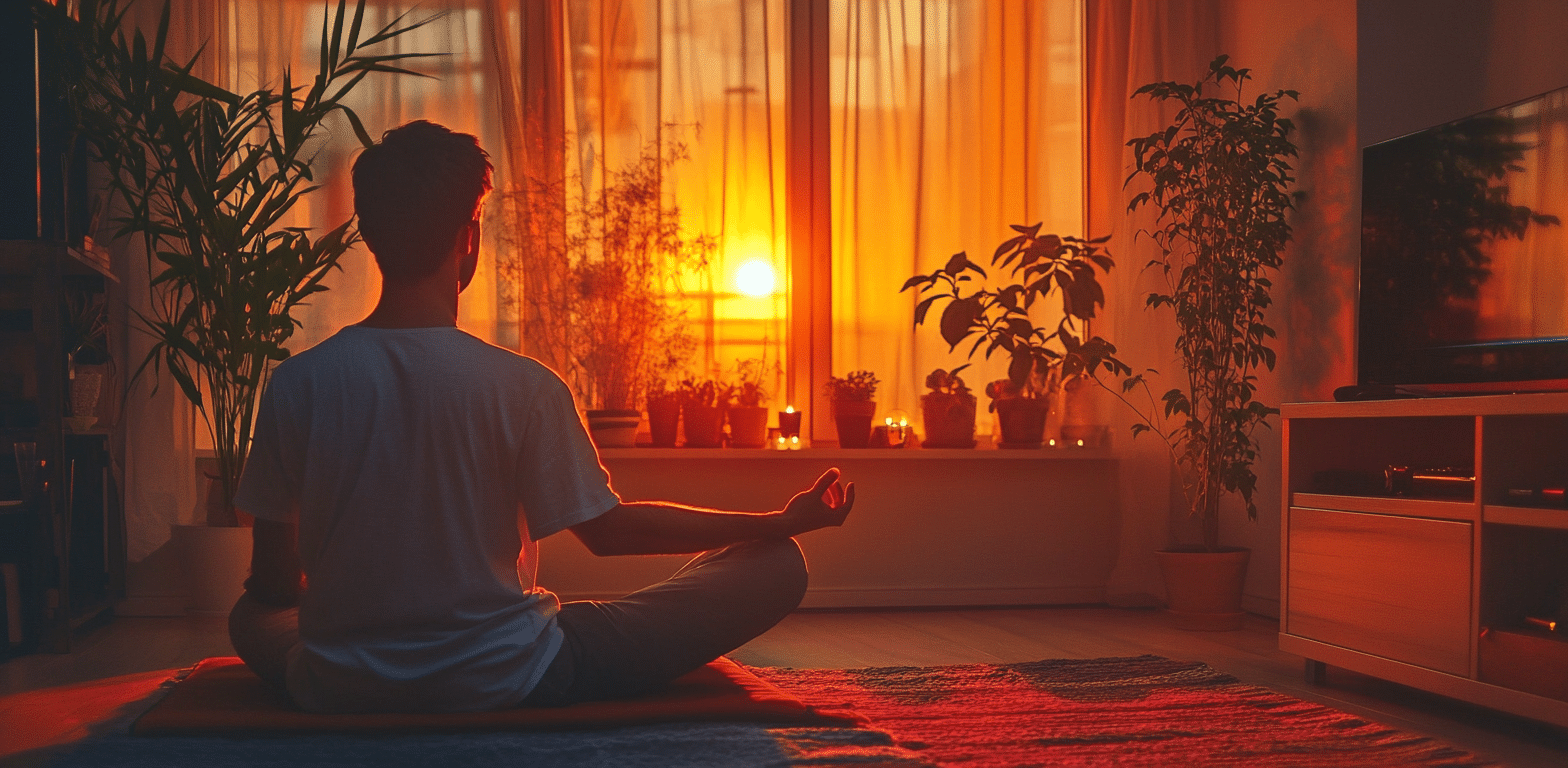
Meditation is far more than a simple technique; it is a journey toward self-understanding and self-discovery. In my experience, regular meditation practice allows people to access deep levels of calm and mental clarity. Through meditation, we train ourselves to observe our thoughts and emotions without identifying with them, which gives us a renewed perspective on our lives.
One of the most effective techniques is breath-centered meditation. By focusing our attention on the inhalation and exhalation, we begin to calm the nervous system and reduce anxiety. Over time, this practice not only helps us release accumulated tension, but also teaches us to recognize thought patterns that may be harmful to our well-being.
Another valuable technique is visualization meditation, in which we create mental images that evoke feelings of peace and joy. This practice not only enriches our meditative experience, but also helps cultivate a positive mindset that is reflected in our daily actions.

It is crucial to remember that meditation is a personal and evolving process. Each individual can find their own way of meditating, whether through silent contemplation, the use of mantras, or moving meditation. Over time, the benefits become evident: greater mental clarity, more effective emotional regulation, and a sense of connection with oneself and with the world around us. Here is a more advanced guide.
As we advance along this path, it is essential to approach meditation with an open and compassionate mindset. The practice will not always be easy; there will be days when the mind feels restless or distracted. However, it is in those moments of challenge that we can truly grow. By being kind to ourselves and persevering in the practice, we discover an inner space of peace that can sustain us through difficult times.
Transforming the relationship between thoughts and body
Understanding how thoughts impact our body empowers us to take conscious steps that improve our health and well-being. By practising self-observation, incorporating relaxation techniques, and cultivating an attitude of self-empathy, we can break the cycle of stress and live in a fuller, more balanced way.

Yoga and meditation are valuable tools in this process, offering a path toward harmony between mind and body. This article has explored the connection between our thoughts and our physical well-being, providing practical strategies for managing this relationship effectively.
Integrating these practices into your daily life will not only transform your experience, but will also allow you to reach a state of balance and inner peace. Start today and discover the transformative power of the mind-body connection!