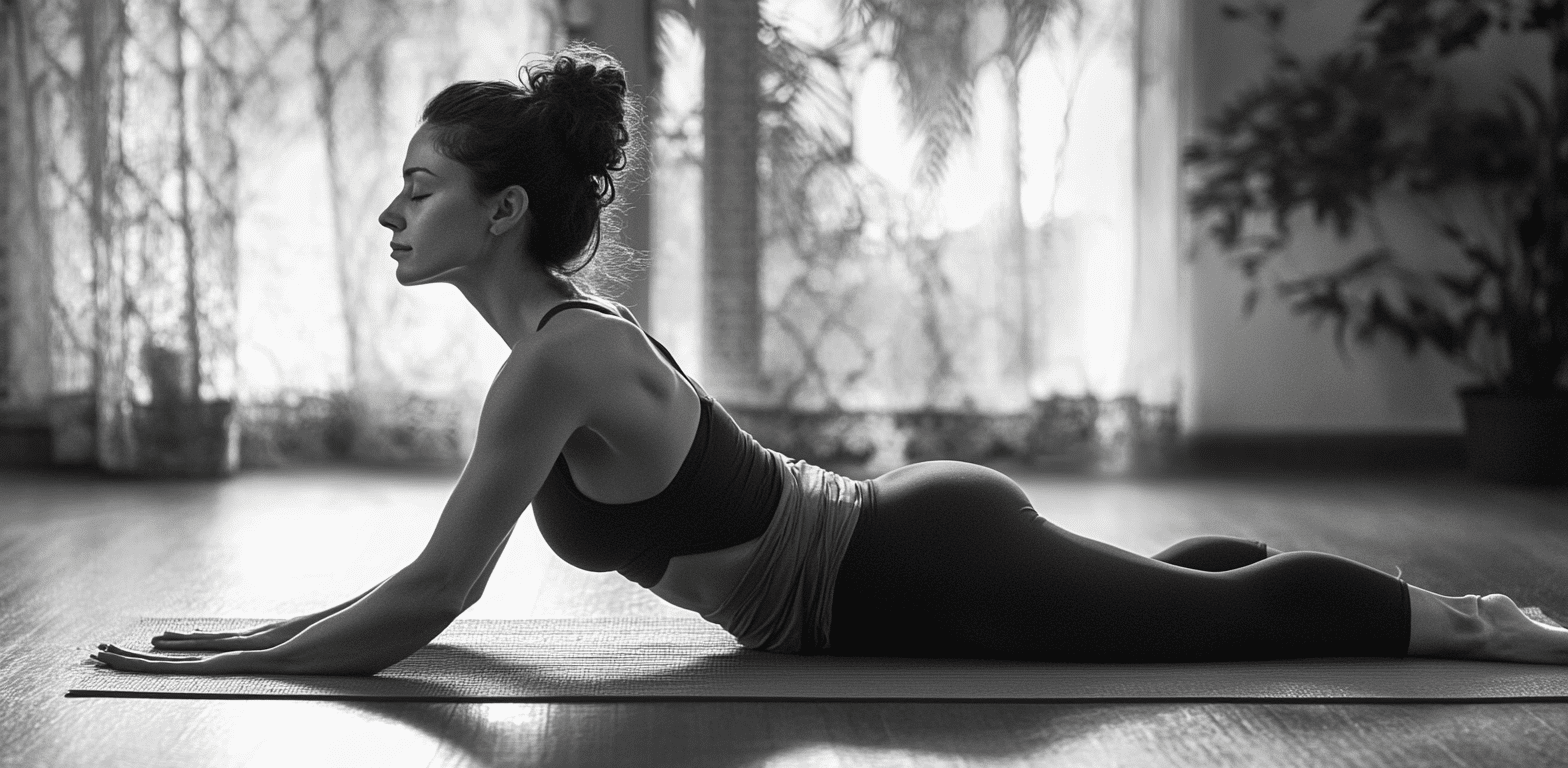



Happiness is a state of wholeness and contentment, with ourselves and the reality that surrounds us. For each person, the idea of happiness will have different nuances, but something we can all agree on is that happiness is a stress-free state.
Some will take it further and see happiness as the complete dissolution of responsibilities, while for others the focus will be on being able to do what they love. Regardless of whether your idea of happiness is proactive or passive, when we feel 100% happy, there is no secretion of cortisol, the stress hormone.
And indeed, nowadays we are all stressed. Especially for those of us who live in urban environments, far from nature, stress can become overwhelming. But regardless of where you live, stress has become a constant for most people. Work demands, an accelerated pace of life and constant pressure keep us in a state of chronic cortisol secretion that leads to anxiety and depression.
In this article, we will explore the importance of managing stress on a day-to-day basis. First and foremost, it is necessary for you to become aware that you are stressed, and let us stop normalizing living saturated with cortisol. Secondly, I will explain in detail how remaining still for as long as possible is the most effective way to bring your nervous system back to a state of calm. I don't mind what position you choose — standing, sitting, lying down… whatever is most comfortable for you. Eyes open or closed, it makes no difference; the only thing I ask is that you remain absolutely still.
Find the balance between productivity and pleasure
We could say that stress is a side effect of capitalist society. If we get to the root of the problem, everything comes down to the idea of productivity that has been sold to us. We have internalized as a society the idea that our worth is directly related to our capacity to produce. This relationship between concepts has permeated deeply into the collective psyche, to the point that our self-esteem — that is, the way in which you perceive yourself — will depend to a great extent on your ability to complete tasks.

The relationship between stress and productivity is explored in depth in the work In Praise of Idleness by the author Bertrand Russell. In his analysis, Russell highlights how the obsession with productivity has displaced our ability to enjoy leisure time. In the author's own words, «The modern world unlearned us how to enjoy leisure time, making us think we need to be productive in order to be worthy»
Rest and leisure time are perceived as something unsatisfying, since they yield no benefits. Of course, we all understand that we need a break from time to time, but be careful not to rest too much and end up becoming lazy.
This distorted perception has contributed greatly to the prevalence of stress, depression and anxiety in contemporary society. However, recognizing the importance of balance between productivity and pleasure is the first step toward reclaiming our mental and emotional health. By integrating moments of rest and recreation into our lives, we can counteract the harmful effects of chronic stress and restore a sense of holistic well-being.
The Cult of Productivity
I was born in 1992, right at the epicenter of an era of capitalist opulence. In those years, money flowed freely — both to spend and to invest — and we grew up immersed in a culture of unbridled consumption. However, in 2024, the situation has changed dramatically. Money is scarce and economic conditions are far more precarious, yet the consumerist mindset ingrained during the glorious nineties persists in our collective psyche.
The idea of consumption in capitalist society is not limited to the acquisition of material goods. It consumption extends to any activity that stimulates our brain's production of dopamine. We are constantly bombarded by a multitude of stimuli designed to provide us with instant gratification, but curiously, these offers of relaxation rarely include spiritual practices capable of providing pleasure and relaxation in a natural, sustained way over time.
From an early age, we are conditioned to believe that our worth is directly related to our capacity to consume and produce. This mindset is constantly reinforced through advertising, the media and prevailing social norms. Chronic stress keeps us trapped in a cycle of work and consumption, driving us to press on in the endless pursuit of more money, more success and more possessions. This constant struggle to reach an unattainable standard of success and happiness only serves to fuel our anxiety and emotional distress.
It is undeniable that capitalist society as we know it has collapsed. This model, based on unbridled consumerism and the exaltation of individuality, has distanced us from the organic rhythms of human beings. The system offers us a version of happiness that consists of living as if we were machines, obtaining pleasure from external sources rather than turning inward.
If we are stressed, overwhelmed and depressed, it is simply because this way of life is not healthy for human beings — no matter how it is packaged and sold to us, and no matter how much it is normalized. A stressed society is a symptom of a dysfunctional system. However, as conscious individuals, we have the power to challenge this paradigm and seek a more balanced and sustainable way of life.
How Do We Combat Stress?
Stress is so normalized in our society that we often do not even realize we are producing an excess of cortisol. Only when stress begins to manifest as anxiety and/or depression are we left with no choice but to acknowledge its presence. What happens is that both anxiety and depression will prevent us from continuing to be productive, and that is when we understand there is a problem. Take a moment to consider just how unhealthy our relationship with productivity is.

The constantly accelerated pace of life, combined with the countless stimuli we receive through screens, make the perfect combination for a society hooked on external sources of relaxation. We could group these into 2 main escape mechanisms, namely drugs and sex. However, this approach only serves to temporarily relieve discomfort, without addressing the underlying causes of chronic stress.
And nothing more can be expected from a society deprived of all practical spirituality, condemned to depend on external sources to relieve stress. Yet this dependence only perpetuates the cycle of stress and emotional disconnection.
The Powerful Tool of Pause for Reducing Stress and Anxiety
In the constant search for stress relief, we often immerse ourselves in activities that distract us from that overwhelming feeling. But what if we adopted the opposite strategy? Instead of seeking distractions, what if we simply stopped altogether?
It is well known that chronic stress triggers the production of cortisol in the body, a hormone associated with stress and anxiety. But here is the key: when we stop, when we choose stillness over activity, the brain ceases to generate cortisol after a few minutes of remaining still.
It is tempting to flee from stress through pleasurable activities such as watching television, eating something delicious or enjoying a glass of wine. These actions can provide momentary relief, but as stress persists, our avoidance strategies tend to become increasingly self-destructive.
The feeling of stress may seem to have momentarily disappeared, but it lies dormant within us, waiting to emerge once the distraction fades and the surge of dopamine comes to a halt. We often resort to this ineffective cycle of stress avoidance, only to find ourselves trapped in a cycle of anxiety and depression.
It is interesting to note that even within the medical field, the importance of stopping in the face of stress is recognized. People who fall ill due to stress are often recommended to take a few days off in nature. Despite this intuition, we often do not deeply understand the power of the pause as an effective tool for combating stress.
Sometimes, the most effective solution is also the simplest, yet the most overlooked. This principle applies equally to stress. Simply stopping and resting in stillness may be the answer we need. In doing so, we begin to experience a significant reduction in our stress levels.

In just half an hour of stillness, stress can diminish by half. Within an hour, our mind begins to clear and solutions to our problems may arise naturally. The relaxation of the mind clears the way for answers to appear, often in an almost magical way.
Of course, for many people remaining still for more than an hour may seem like an impossible task. Like any other skill, meditationrequires constant practice to be perfected. However, those who can maintain stillness for longer periods will find that stress fades away completely.
In summary, the pause — the simple act of stopping and resting in silence — can be one of the most powerful tools for reducing stress and anxiety in our lives. Through consistent practice, we can cultivate this skill and experience greater tranquility and mental clarity in our day-to-day lives.
The Key to Reducing Stress: Living in the Present
Stress is intrinsically linked to a mind that projects itself into the future. When our attention is completely focused on the present moment, worry, panic and anxiety simply cannot find a place to take root. The key lies in bringing our mind back to the now, where true peace and tranquility reside.
The challenge arises from the volatile nature of the mind, which tends to wander and constantly project itself toward the past or the future. Our task is to train it to return to the present, again and again if necessary. This act of bringing the mind back to the present moment is crucial for diminishing the power that stress holds over us.
The mind loses its capacity to generate stress when we remain focused on the present. This does not mean suppressing rational thought, but rather controlling the mind's tendency to wander aimlessly. The challenge lies in learning to be present — a skill that is not taught to us, but that we must cultivate on our own.
Living in the present is a skill that is practiced and improved with time and patience. Through the consistent practice of mindfulness and meditation, we can train our mind to remain in the present moment with greater ease. Over time, we will discover that stress loses its hold over us and we will experience a greater sense of calm and well-being in our lives.
Conclusion
In summary, capitalist society and stress are intrinsically interconnected, feeding each other in a vicious cycle of consumption and chronic stress driven by the idea of productivity. However, by recognizing this connection and challenging the norms imposed by the system, we can forge a path toward a fuller, more balanced and meaningful life.
In the whirlwind of modern life, the pursuit of happiness and the struggle against stress become paramount objectives. Happiness is defined as a state of wholeness and contentment, where we feel in harmony with ourselves and the world around us. However, for many, this pursuit is hindered by the constant pressure of contemporary society, where the consumerist mindset rooted in capitalist ideology has generated a vicious cycle of chronic stress and anxiety. This phenomenon is fueled by the constant pressure to be productive and consume without cease, which often leads to a sense of emotional distress and exhaustion.
Fortunately, amid these challenges, there are natural and effective strategies for relieving stress and finding inner peace. Learning to live in the present emerges as one of the most powerful tools in this struggle. By focusing on the present moment and letting go of worry about the future or regret about the past, we can significantly reduce anxiety and stress in our lives. Furthermore, incorporating moments of tranquility into our daily routine can help us counteract the harmful effects of stress and restore a sense of balance and harmony.